

Co-Founder, Hoot HRT
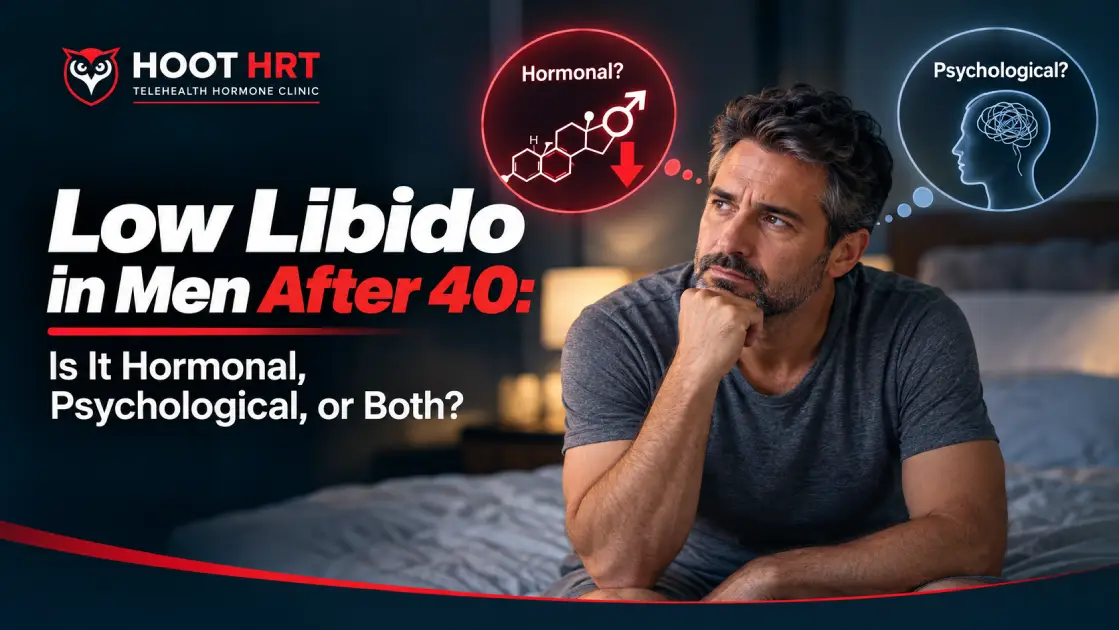
A man who notices his sex drive dropping after 40 is not experiencing something rare. The Massachusetts Male Aging Study followed over a thousand men for nine years and found that sexual desire declines consistently with age. That does not mean it is untreatable, or that the cause is obvious. Most cases have more than one driver, and treating only one rarely solves the problem.
This article covers the hormonal and psychological forces that most often reduce sex drive after 40, how they interact, and what a complete evaluation should include.
Low libido is a reduction in sexual desire that a man notices and finds distressing. A gradual shift that does not bother him is not a clinical problem. When the change is noticeable and unwanted, it is worth investigating.
Low libido is not the same as erectile dysfunction, though the two often occur together. A man can have a normal erection and no interest in using it. He can also have reduced libido that makes performance more difficult. Treating one without addressing the other often leaves the problem partly in place.
The symptoms of low testosterone in men can overlap with low libido in ways that make them easy to conflate. But low libido is a symptom, not a diagnosis. The diagnosis comes from understanding what is causing it.
Testosterone drives sexual desire in men. The American Urological Association defines hypogonadism as a total testosterone below 300 ng/dL on two morning draws. Below that threshold, low libido is a recognized clinical finding.
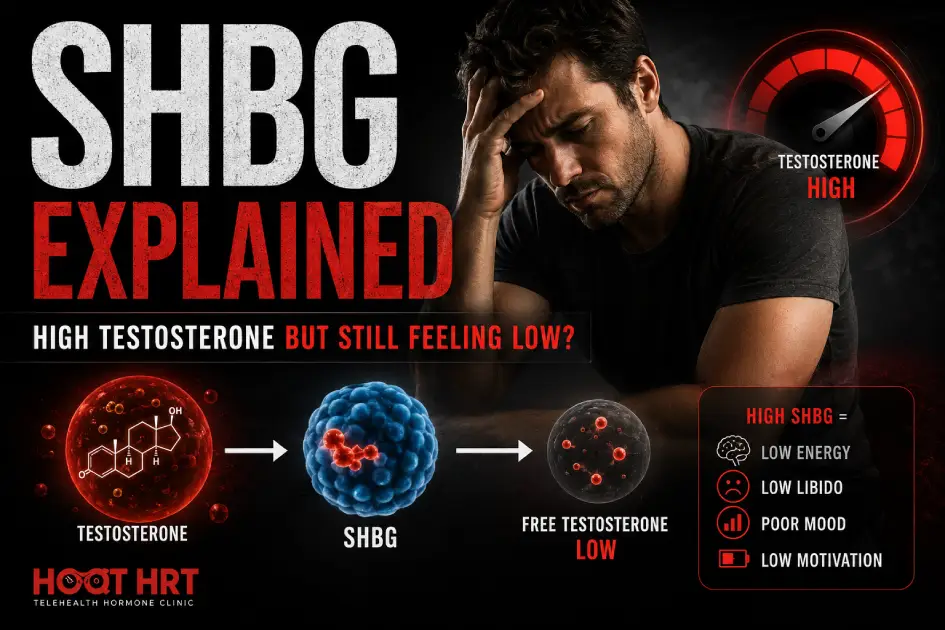
But the total testosterone number does not tell you how much of that testosterone is actually available to act on tissue. Most testosterone in the blood is bound to proteins, mainly sex hormone-binding globulin (SHBG), and is biologically inactive in that bound form. Free testosterone is the unbound portion that can reach receptors in the brain and body. A man with a total testosterone of 420 ng/dL and very high SHBG may have less free testosterone than a man with a total of 320 ng/dL and lower SHBG.
The Endocrine Society’s clinical practice guidelines specify that borderline total testosterone results should be confirmed with free testosterone and SHBG testing before any conclusion is drawn. A lab report that shows only total testosterone and calls it normal may be missing the most clinically relevant number. Understanding why SHBG determines how much testosterone your body can actually use is part of what separates a thorough panel from a basic one.
SHBG tends to rise with age. That means a 50-year-old man can have the same total testosterone he had at 35 and still have meaningfully lower free testosterone because more of it is bound and unavailable.
A standard primary care testosterone panel often measures total testosterone and little else. Three hormonal drivers of low libido are routinely missed as a result.
Estradiol. Testosterone converts to estradiol in men through a process called aromatization. Some estradiol is necessary for libido, bone health, and cardiovascular function in men. Too little suppresses sexual desire. Too much does the same thing. Body fat contains aromatase enzymes, so men who carry extra weight often convert more testosterone to estradiol than they should, producing lower testosterone and higher estradiol simultaneously. Most standard panels do not measure estradiol in men at all. When estradiol is out of range in either direction, libido suffers regardless of what the testosterone looks like.
Prolactin. Elevated prolactin, a condition called hyperprolactinemia, suppresses the hormonal chain that drives testosterone production. The hypothalamus normally releases GnRH in pulses, which signals the pituitary to release LH, which tells the testes to produce testosterone. Prolactin disrupts that chain at the top. Causes include a benign pituitary tumor called a prolactinoma, certain medications, and chronic stress. Prolactin is simple to measure but rarely included in a standard panel. When Hoot HRT catches an elevated prolactin, the patient is referred to the appropriate specialist for further workup.
Thyroid function. Hypothyroidism suppresses libido through two connected pathways. Elevated TRH stimulates the pituitary to release more prolactin, which then suppresses GnRH and testosterone production. Hypothyroidism also causes fatigue, depression, and metabolic slowdown that reduce desire independently of hormone levels. TSH is one of the most commonly omitted markers in hormone evaluations. When it is abnormal, treating testosterone without addressing the thyroid produces limited results.
None of these require exotic testing. They require a panel designed to find answers, not confirm a normal result.
Stress and anxiety are the psychological causes most men recognize. Chronic stress raises cortisol, which suppresses the hypothalamic signals that drive testosterone production. That is a real hormonal mechanism, not just a feeling.
But the picture is broader than stress alone.
Depression reduces libido through at least two routes. It lowers dopamine activity in the brain regions that drive sexual desire, making sex feel unmotivating rather than wanted. Research published in Frontiers in Endocrinology also found that 40 percent of men with depression report low libido, and 34 percent show biochemical hypogonadism on testing. The relationship runs in both directions: low testosterone can worsen depression, and depression can suppress testosterone. Neither treats the other automatically.
Relationship context matters too. A man whose desire has dropped uniformly is a different clinical picture from one who notices the drop only in a specific context. That distinction points toward different contributors and different conversations.
Performance anxiety creates its own feedback loop, which the next section covers.
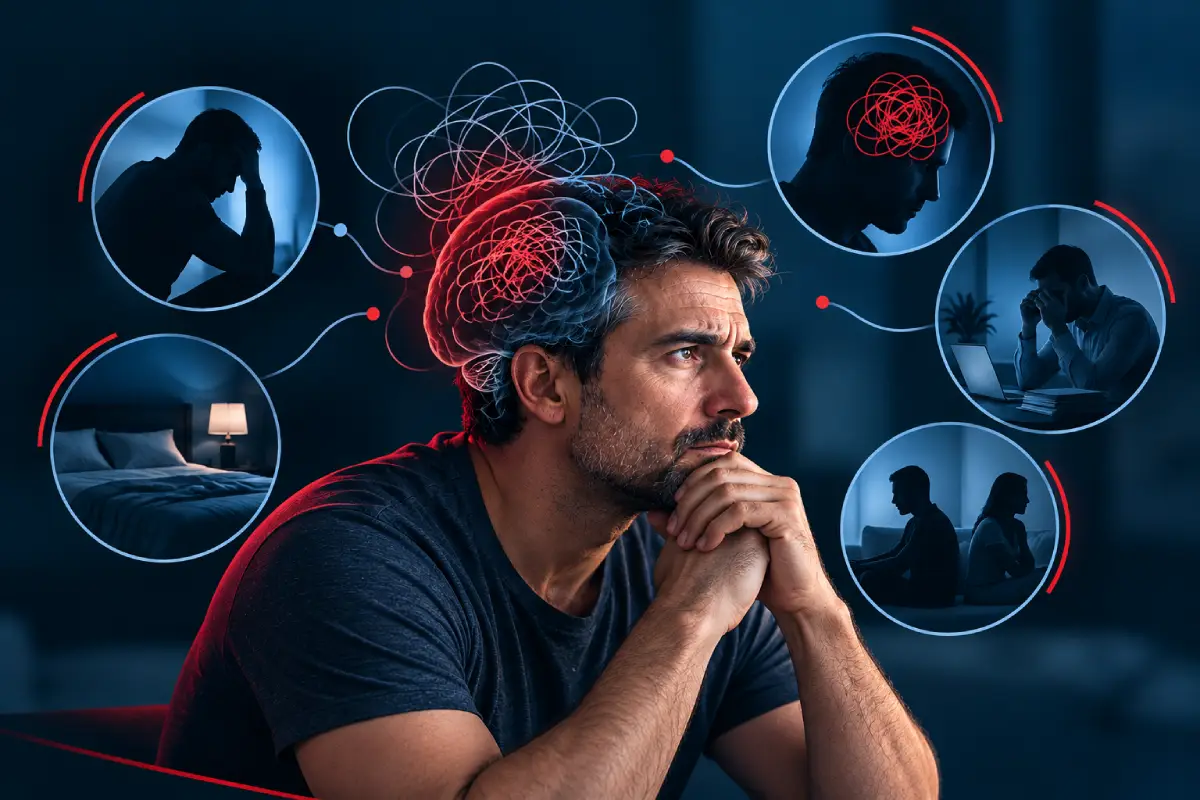
The hormonal and psychological causes of low libido do not operate in separate lanes. They interact in ways that make each one worse.
Consider a man whose testosterone has dropped to the lower end of normal in his mid-40s. His desire is reduced, and when he does initiate, his performance is less reliable. That observation creates anticipatory anxiety before the next attempt. Anticipatory anxiety raises cortisol, which suppresses GnRH, which lowers LH, which reduces testosterone further. He attributes it to stress, does not get tested, or gets a basic panel, sees a result in the normal range, and stops looking.
The same dynamic runs in reverse. A man with depression has blunted dopamine, which reduces desire. His testosterone declines through cortisol suppression. He avoids sexual situations, which removes the behavioral reinforcement that normally maintains desire. Treating only depression, or only testosterone, addresses one part of a cycle with several entry points.
An evaluation that treats hormones and psychology as separate conversations misses how they actually work.
Testosterone is not produced continuously throughout the day at a steady rate. Most testosterone production in men happens during sleep, particularly during the NREM and deep sleep stages. When sleep is interrupted repeatedly, that production is disrupted.
Obstructive sleep apnea (OSA) fragments sleep hundreds of times per night without fully waking the patient. A man with untreated OSA may spend eight hours in bed and still fail to produce adequate testosterone because the deep sleep phases needed for hormone release are constantly cut short. One review in the World Journal of Men’s Health found that CPAP therapy resolved erectile dysfunction in 75 percent of OSA patients reviewed, pointing to how directly sleep quality affects sexual function.
Hoot HRT screens every patient for sleep apnea before starting therapy. A man who comes in with low testosterone, low libido, and daytime fatigue needs an OSA screening as part of his evaluation. If a sleep study is warranted, Hoot HRT refers the patient for one. Treating the OSA sometimes resolves libido complaints that would otherwise be attributed to hormone levels alone. Starting testosterone on top of untreated sleep apnea is treating a symptom while the cause continues.
Several commonly prescribed medications reduce libido as a direct side effect, and many men are not told this when the prescription is written.
SSRIs and SNRIs are the most significant examples. They raise serotonin, which dampens the dopamine signaling that drives sexual desire. Reduced libido and delayed orgasm affect a substantial proportion of patients on these medications. This is a pharmacological mechanism, not a character flaw.
Other common culprits include beta blockers, thiazide diuretics, opioids for chronic pain, and finasteride, used for hair loss and BPH, which carries sexual side effects that can persist after stopping.
Hoot HRT reviews a patient’s full medication list at intake. When a medication is a likely contributor, that finding is communicated so the patient can have an informed conversation with the prescribing provider. Some men have attributed reduced libido to age or stress for years without knowing the cause was a drug they were already taking.
A complete evaluation for low libido in men over 40 is not a single testosterone number. It is a panel built to find answers.
That means total testosterone, free testosterone via the Vermeulen method, SHBG, estradiol, prolactin, TSH, LH, FSH, PSA, and a metabolic panel. LH and FSH identify whether low testosterone originates in the testes or in the hypothalamic-pituitary system, which shapes the clinical response. A complete blood count covers hematocrit.
Intake should also include a sleep apnea screening, a medication review, and a discussion of mood and stress history. These are not extras. They are part of finding the real answer.
The how it works page covers what the Hoot HRT evaluation process looks like from the first visit forward, including what is drawn, how results are reviewed, and what happens after.
Research published in 2021 found that among older men with low libido, free testosterone was not a statistically significant independent predictor of the complaint. Nocturia, a sign of disrupted sleep and prostate issues, was a stronger predictor. A panel that stops at one hormone rarely explains what is actually happening.
What does not belong in a complete evaluation: skipping free testosterone in favor of total only, omitting prolactin and thyroid from a panel, or rushing past a medication review. These omissions produce a result that looks normal and leave the patient without an answer.
Testosterone therapy is the right answer when low libido is driven by confirmed low testosterone, the panel supports it, and other contributing causes have been evaluated and addressed.
The Endocrine Society guidelines are clear: testosterone therapy should not be initiated based on symptoms alone. Two morning draws below 300 ng/dL, or a clearly deficient free testosterone alongside a borderline total, support starting therapy. A man with a total of 320 ng/dL, normal free testosterone, and untreated depression is not a candidate for testosterone as the primary intervention.
The same guidelines state that testosterone is not recommended for depression or psychological complaints without documented hormonal deficiency. It is a hormone replacement for confirmed deficiency, not a mood medication. When the deficiency is confirmed and the panel is clear, testosterone replacement therapy is a well-supported intervention with meaningful evidence for improving libido, energy, and wellbeing.
When other factors are driving low libido, addressing those first is both the clinically correct approach and the one more likely to produce a real result. Testosterone on top of untreated sleep apnea, a poorly matched antidepressant, or unaddressed depression rarely produces the outcome the patient is hoping for.
The goal is not to prescribe testosterone. The goal is to find what is actually wrong and address it correctly.
Men throughout San Antonio, Austin, and across Texas can start with a complimentary consultation by telehealth. No referral, no office visit required.
————————————————————————————————————————————————————————————————————————————————————-
Medical Review Byline: Medically reviewed by John M. Cash, MD, Co-Founder and Medical Director, Hoot HRT
Low libido after 40 usually comes from more than one cause. Declining testosterone, rising SHBG, elevated prolactin, thyroid dysfunction, chronic stress, depression, sleep apnea, and certain medications all reduce sex drive through different mechanisms that often overlap. A complete evaluation looks at the full picture rather than a single hormone level.
Yes. Total testosterone in the normal range does not confirm that a man has adequate hormonal support for libido. Much of the testosterone in the blood is bound to SHBG and is biologically unavailable. Free testosterone is the active fraction. A man can have a total testosterone that looks acceptable and still have significantly low free testosterone. An evaluation that measures only total testosterone can miss this entirely.
Not always. Depression, stress, relationship factors, and medications are common non-hormonal causes that can produce the same reduction in sexual desire as hormonal deficiency. In most cases, multiple factors are present at the same time. Treating only one when several are active tends to produce limited results.
Yes. SSRIs and SNRIs are among the most common medication causes of low libido in men. These medications raise serotonin, which dampens the dopamine signaling that drives sexual desire. Sexual side effects, including reduced libido and delayed orgasm, affect a substantial proportion of patients on these drugs. If a medication is identified as a contributing cause during an evaluation, Hoot HRT communicates that finding so the patient can discuss it with the prescribing provider.
Significantly. Most testosterone production in men occurs during deep sleep. Obstructive sleep apnea fragments deep sleep and disrupts that production. Research in the World Journal of Men’s Health found that treating sleep apnea resolved erectile dysfunction in 75 percent of affected patients. Hoot HRT screens for sleep apnea at intake because untreated OSA can undermine any hormone therapy.
A complete panel for low libido in men should include total testosterone, free testosterone, SHBG, estradiol, prolactin, TSH, LH, FSH, and a metabolic panel at minimum. Estradiol out of range in either direction suppresses libido. Elevated prolactin disrupts the hormonal chain that drives testosterone production. Hypothyroidism can raise prolactin and independently suppress libido through fatigue and metabolic effects. These markers are commonly omitted from standard panels.
Hoot HRT evaluates men throughout San Antonio, Austin, and Texas via telehealth for the hormonal and metabolic causes of low libido. The evaluation includes a complete panel, medication review, and sleep apnea screening. For men with confirmed hormonal deficiency, testosterone therapy is available as a monitored treatment. For causes that fall outside that scope, Hoot HRT provides a clear finding and supports the patient in getting the right referral.
DISCLAIMER
This article is for informational purposes only and does not constitute medical advice. Hormone therapy may not be appropriate for all patients. Individual results vary. Consult a qualified healthcare provider before making any decisions about testing or treatment.
SOURCES