What your standard lab panel misses
SHBG binds testosterone in your bloodstream,
making it biologically inactive
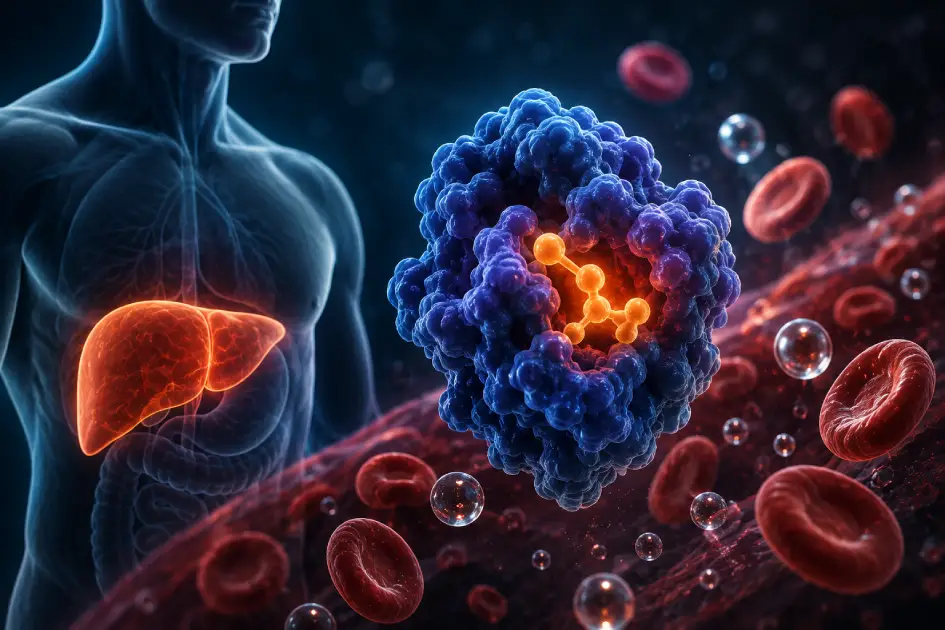
SHBG is a liver-produced protein that locks testosterone away from your cells.
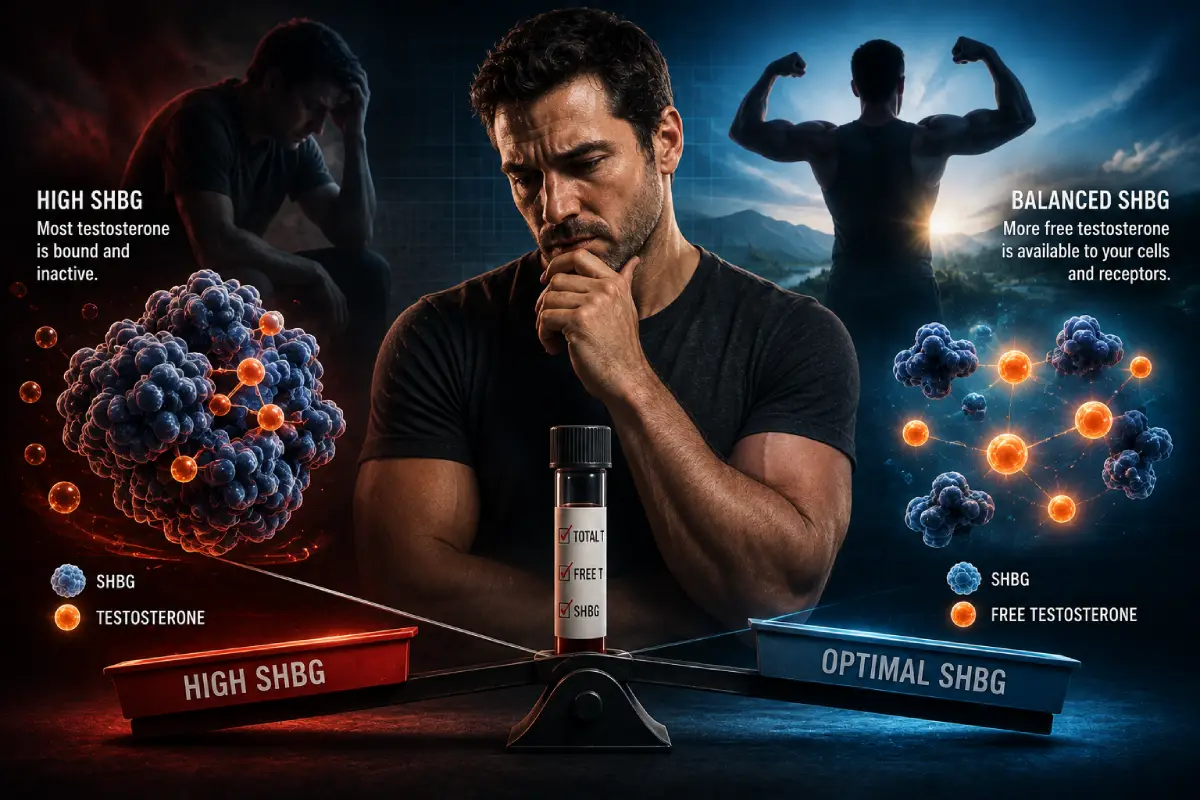
When SHBG is elevated, a larger share of your testosterone can't reach tissue or produce any
effect, even when your total testosterone sits in the normal range on a standard panel. This
is one of the most common and overlooked reasons men feel every symptom of low testosterone
despite being told their labs are fine. At Hoot HRT in San Antonio, Texas,
total testosterone, free testosterone, and SHBG are evaluated together before any clinical
decision is made.
-
What SHBG does: binds testosterone in the bloodstream and makes it biologically inactive, unable to reach cells or produce any effect
-
Three fractions: SHBG-bound (inactive), albumin-bound (partially usable), free testosterone (fully active, roughly 1 to 3% of total)
-
High SHBG: less free testosterone available to cells, even when total testosterone reads normal on a standard panel
-
Symptoms: fatigue, low libido, brain fog, poor recovery, reduced muscle mass, and mood changes
-
At Hoot HRT: all three testosterone fractions are evaluated together before any treatment recommendation is made
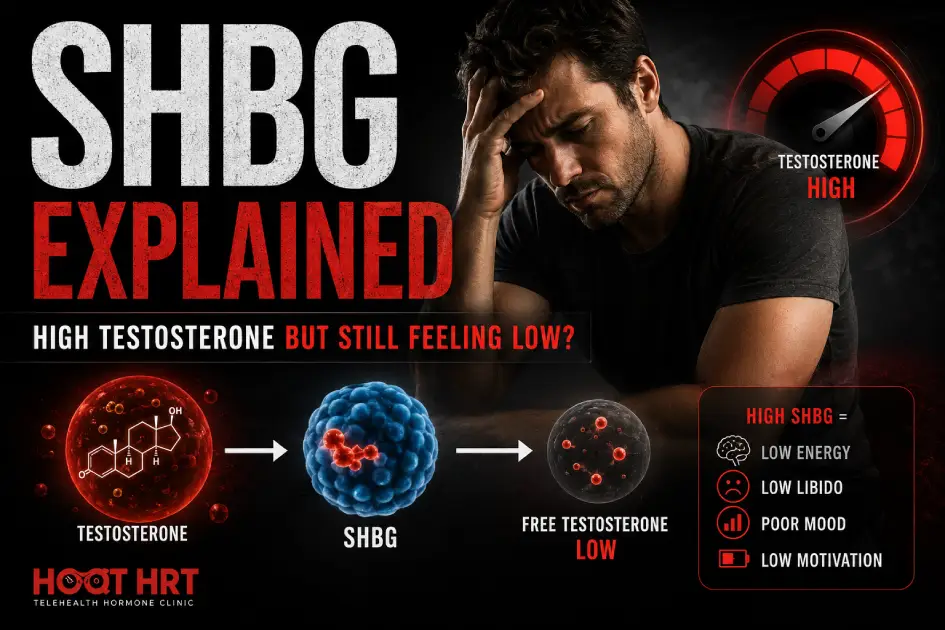
If your testosterone came back normal on a standard blood panel but you still feel flat, fatigued, and low on drive, SHBG may be exactly what your lab report is missing. Sex hormone binding globulin is a protein that binds to testosterone in the bloodstream and makes it biologically inactive, without changing the total testosterone number at all. A lab panel that only measures total testosterone cannot tell you how much of that testosterone is actually available to your cells. Understanding what SHBG is, why it rises, and how it affects how you feel is one of the most clinically important things a man dealing with persistent low-testosterone symptoms can know.
What Is SHBG and What Does It Actually Do?
Sex hormone binding globulin (SHBG) is a protein produced in the liver that attaches to sex hormones, primarily testosterone and estradiol, and carries them through the bloodstream. While testosterone is bound to SHBG, it is biologically inactive. It cannot enter your cells, activate androgen receptors, or produce any of the physiological effects your body depends on it for.
Testosterone in your blood exists in three distinct forms. SHBG-bound testosterone is tightly attached to SHBG and completely inert. Albumin-bound testosterone is loosely attached to albumin, another blood protein, and remains partially available to tissues. Free testosterone is fully unbound, completely bioactive, and represents roughly 1 to 3 percent of the total testosterone in your bloodstream at any given time.
Most standard blood panels report total testosterone, which combines all three fractions into a single number. When a man is exploring whether testosterone replacement therapy is clinically appropriate for him, a panel that stops at total testosterone alone can produce a deeply misleading picture. Two men with the same total testosterone number can have dramatically different amounts of usable hormone depending on how much SHBG is present.
Why a Normal Total Testosterone Lab Can Miss the Real Problem
This is the scenario that frustrates most patients. The lab report comes back in range. They are told everything looks fine. But the man receiving that information still feels exhausted, flat, and like a version of himself he does not recognize. The total testosterone number is only part of the story.
A landmark study published in the Journal of Clinical Endocrinology and Metabolism by Antonio L. et al. (2016) found that low free testosterone is associated with hypogonadal signs and symptoms even when total testosterone falls within the normal range. Critically, men with low total testosterone but normal free testosterone did not show the same clinical features of androgen deficiency. The practical takeaway is that free testosterone is a stronger predictor of how a man actually feels than total testosterone alone.
This is often called functional hypogonadism. The body is producing enough testosterone. The problem is that elevated SHBG is binding most of it before it can reach cells. The symptoms of low testosterone that follow are clinically identical to those seen when testosterone production itself is insufficient, which is exactly why this picture gets missed when only total T is checked.
What High SHBG Actually Feels Like
The symptoms of elevated SHBG in men mirror those of clinically low testosterone because, at the cellular level, that is exactly what is happening. The most common presentations include persistent fatigue that does not improve with adequate sleep, reduced libido and fewer morning erections, brain fog and difficulty sustaining mental focus, poor recovery from training and slower strength development, increased abdominal fat despite consistent physical activity, and mood changes including low motivation and irritability.
High SHBG also binds estradiol, which matters beyond testosterone alone. Estradiol plays a meaningful role in bone density and cardiovascular function in men. When SHBG rises and pulls estradiol down alongside free testosterone, the downstream effects on long-term health extend further than most men realize when they first see the lab value.
The clinical reality is that many men experiencing this pattern are told their results are normal and sent home without further investigation. The missing step is almost always measuring free testosterone and SHBG alongside total testosterone.
What Causes SHBG to Rise?
Several factors drive SHBG upward, and identifying which one is driving the elevation is the first step toward addressing it effectively.
Age is the most consistent driver. SHBG naturally increases as testosterone declines with age, which compounds the problem significantly. As total testosterone drops and SHBG rises simultaneously, free testosterone falls faster than either marker alone would suggest.
Hyperthyroidism is a direct cause. Excess thyroid hormone stimulates the liver to produce more SHBG. This is one of the reasons a comprehensive hormone panel includes thyroid markers. Thyroid dysfunction can present with symptoms nearly identical to low testosterone, and when it elevates SHBG as a secondary effect, the clinical picture becomes more complex than a single lab number can resolve.
Chronic alcohol use significantly elevates SHBG through its effects on liver function. Men who drink heavily often have SHBG values that normalize substantially when alcohol intake is reduced consistently over time.
Low androgen feedback creates a self-sustaining loop. When testosterone is low, the hormonal signal that normally moderates SHBG production weakens, allowing SHBG to rise further. Low testosterone can therefore cause high SHBG, which in turn keeps free testosterone low, which sustains the cycle.
Very low caloric intake, high fiber intake, and certain anticonvulsant medications have also been associated with elevated SHBG in the research literature. In some men, identifying and addressing a modifiable cause is sufficient to bring SHBG down without any prescription involvement.
What About Low SHBG?
The other direction matters too. When SHBG is too low, more testosterone circulates in an unbound state, which can sound advantageous. In practice, low SHBG is closely associated with insulin resistance, metabolic syndrome, type 2 diabetes, obesity, and non-alcoholic fatty liver disease (NAFLD) in men.
Low SHBG in men is often a metabolic warning signal rather than a hormonal advantage. A man with low SHBG and high total testosterone may have more free testosterone in the short term, but the underlying metabolic picture that drives the low SHBG carries its own cardiovascular and long-term health implications that need to be addressed.
Both ends of the SHBG range are evaluated at Hoot HRT in the context of the full metabolic panel, not as an isolated number, because the context is what determines clinical significance.
How Hoot HRT Evaluates SHBG, and What Happens When It Is High
At Hoot HRT, SHBG is included in every male hormone evaluation as standard practice. Total testosterone, free testosterone, and SHBG are measured together, not sequentially or as optional add-ons. A total testosterone number without a corresponding SHBG and free testosterone does not provide a complete clinical picture, and treatment recommendations at Hoot HRT are never based on incomplete data.
When SHBG comes back elevated, the clinical evaluation at Hoot HRT works through several considerations before any prescription is written.
The first step is identifying the cause. Thyroid panel, liver enzymes, fasting insulin, cortisol, and a full medication and alcohol history all factor into this conversation. If a correctable driver exists, addressing it first may normalize SHBG without any hormonal intervention.
The second step is reviewing modifiable lifestyle factors. Alcohol reduction, consistent resistance training, and maintaining adequate caloric intake all produce meaningful effects on SHBG in appropriate candidates. These are not substitutes for medical treatment when clinical intervention is warranted, but they are a legitimate part of the picture and worth addressing before layering in prescriptions.
The third step, when clinically appropriate, is a discussion of boron. Boron is a trace mineral that some research has associated with modest reductions in SHBG and increases in free testosterone, though the evidence is limited and individual response varies. When a patient’s SHBG is modestly elevated and other factors are being addressed concurrently, boron may be discussed as a non-prescription supporting option.
If SHBG remains elevated and free testosterone is functionally low after optimization, the clinical conversation shifts to prescription options. For men without active fertility concerns, the choice between testosterone replacement therapy and enclomiphene depends on the severity of the deficiency, symptom burden, and individual health profile. For men with fertility goals, how Hoot HRT approaches the full evaluation places enclomiphene as the first clinical discussion, since it stimulates the body’s own testosterone production without suppressing it.
The distinction in our approach is worth being clear about. SHBG alone does not determine treatment. The full picture, symptoms, total testosterone, free testosterone, metabolic context, and patient goals, guides every recommendation.
If you have been told your testosterone is normal but you still feel like something is significantly off, the answer may be in what the labs are not measuring. Hoot HRT is a cash-pay telehealth hormone clinic serving men and women across Texas, including San Antonio, Austin, Houston, and Dallas. Every male hormone evaluation includes SHBG, free testosterone, and a full metabolic panel, because a single number is rarely the whole story.
Book a free initial consultation with Joe Hamm, PA-C. If SHBG is part of what is driving your symptoms, we will find it.
—————————————————————————————————————————————————————————————————————————————————————–
Medically Reviewed by: Joe Hamm, PA-C, Co-Founder, Hoot HRT
Published by: Hoot HRT
Frequently Asked Questions
Disclaimer: This article is for general educational purposes only and does not constitute a diagnosis or treatment recommendation. Hormone health involves individual factors that require clinical evaluation. All treatment decisions should be made with a qualified clinician who has reviewed your specific labs, symptoms, and health history.
Sources
Antonio L. et al. “Low free testosterone is associated with hypogonadal signs and symptoms in men with normal total testosterone.” Journal of Clinical Endocrinology and Metabolism. 2016;101(7):2647-2657.
Anderson DC. “Sex-hormone-binding globulin.” Clinical Endocrinology. 1974;3(1):69-96.
Bhasin S. et al. “Testosterone Therapy in Men With Hypogonadism: An Endocrine Society Clinical Practice Guideline.” Journal of Clinical Endocrinology and Metabolism. 2018;103(5):1715-1744.
Naghii MR. et al. “Comparative effects of daily and weekly boron supplementation on plasma steroid hormones and proinflammatory cytokines.” Journal of Trace Elements in Medicine and Biology. 2011;25(1):54-58.