

Co-Founder, Hoot HRT
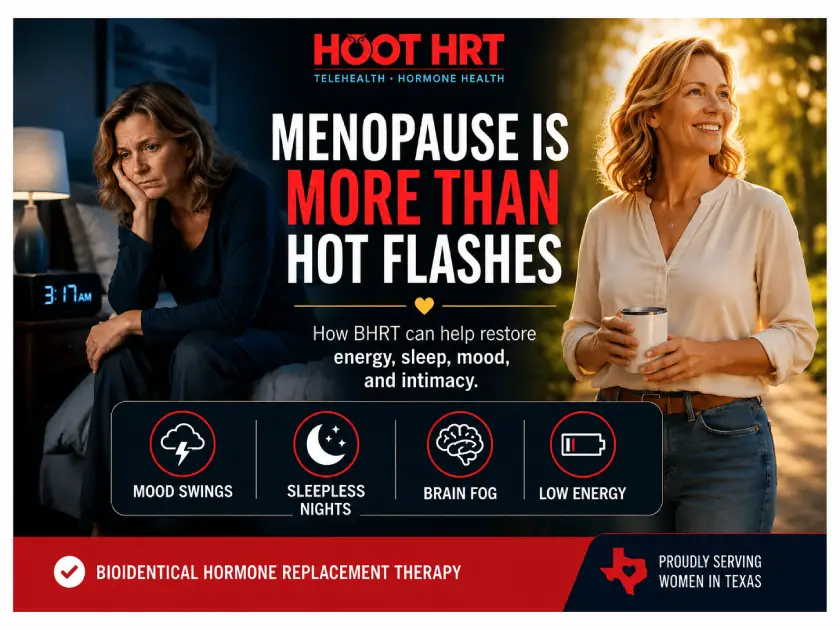
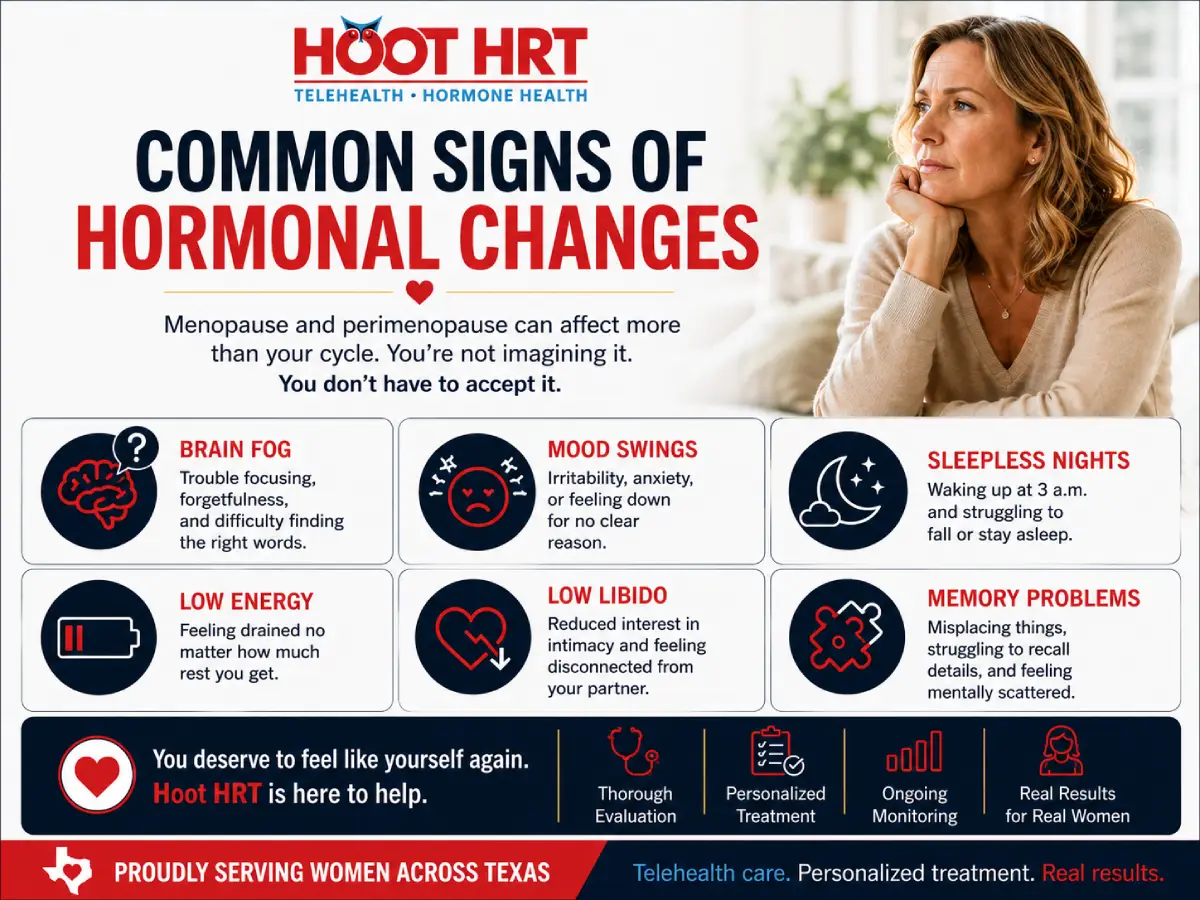
If mood swings, sleepless nights, and a quiet distance from your partner feel like your new normal, you’re not imagining it, and you’re not alone. Menopause and perimenopause change more than your cycle. They affect sleep, mood, memory, energy, and desire, often all at once, and for many women the right evaluation and treatment can meaningfully change how this stage feels.
For years, women have heard that brain fog, flat mood, 3 a.m. wake-ups, and fading desire are just what aging feels like. As a physician who sees this every week, I want to say plainly that this story is incomplete. Midlife doesn’t have to be a slow decline. For most women, it’s a stage that responds well to the right care.
Picture an ordinary version of this. You wake up already tired. A word you’ve used a thousand times sits just out of reach. Small things wear on your patience, and then you feel guilty for snapping at someone you love. The things that used to interest you feel muted, like they’re happening on the other side of a window. Intimacy starts to feel like one more task on the list instead of something you actually want. Slowly, you notice yourself pulling back from your partner, your friends, and the version of yourself you remember from a few years ago.
This usually isn’t a failure of willpower. It’s biology. As estrogen, progesterone, and testosterone shift and decline, they touch nearly everything: sleep architecture, mood regulation, memory, energy, and libido. A 2024 review found that when clinicians overlook menopausal mood and sleep changes, women end up carrying a burden that quietly limits their work, their relationships, and their sense of self (Borozan et al., World Journal of Psychiatry, 2024). You’re not imagining it, and you don’t have to accept it as permanent.
Many women bring these exact symptoms to a primary care visit or an OB/GYN and leave with a shrug. Most clinicians practicing today trained during the two decades when hormone therapy was treated as broadly dangerous, so they were never taught to confidently test, diagnose, and monitor perimenopause and menopause. That’s a training gap, not a character flaw. Structurally, many OB/GYNs are managing deliveries and surgeries and simply don’t have the time in a day to run full hormonal evaluations.
Insurance adds another layer. Insurers are generally set up to treat a condition once it has fully developed, not to prevent one. They’re often reluctant to cover the repeated labs, follow-up visits, and personalized medication that good hormone care actually requires. The result is women left bewildered and untreated, carrying both the symptoms and the cost of a fragmented system. Navigating that maze alone, with inconsistent results, often ends up costing more in time, money, and years than getting a proper evaluation from the start.
Want the clinical detail behind all of this? Our Health Education Center walks through exactly how hormone changes are tested, diagnosed, and monitored, and our FAQ page covers the questions we hear most from women starting this process.
Hoot HRT was built around three things women tell us they’re actually missing elsewhere: a real evaluation, honest information, and a plan built around their actual life instead of a generic protocol.
We are not a testosterone mill, and we don’t cut corners to save cost. We spend up to 45 minutes on a first visit understanding sleep, stress, diet, and daily routine, paired with full lab work, so every recommendation is medically appropriate for that specific patient. Bioidentical hormone replacement therapy, delivered through whichever method fits best- cream, gel, injection, or oral formulation, is one tool in that plan. It’s used to guide care over time, not handed over as a one-time prescription. Women interested in the clinical specifics of that program can see how it works on our hormone therapy for women page.
A proper evaluation looks at more than a single number. Estrogen, progesterone, and testosterone levels matter, but so does thyroid function, cortisol patterns, and metabolic markers, since these systems influence each other constantly. That’s why a single lab draw taken on the wrong day, or a panel that only checks one hormone, so often leaves women with a normal-looking result and symptoms that say otherwise. Ongoing monitoring after treatment starts is what actually lets a plan get adjusted as your body responds, instead of staying fixed to a first guess.
Here’s the change that surprises women most. As the fog lifts and energy returns, something else often reopens: the desire to reconnect. Women who had quietly pulled back started reaching toward their partners, friends, and family again. If low desire specifically has been part of the picture, that often needs its own evaluation, separate from general hormone therapy, and our women’s sexual health program addresses that directly.
The research backs this up. A meta-analysis of 36 randomized trials in more than 8,000 women found that testosterone significantly improved sexual desire, arousal, and satisfaction while reducing sexual distress (Islam et al., Lancet Diabetes & Endocrinology, 2019). Separately, reviews show hormone therapy can ease the mood swings and disrupted sleep that quietly strain relationships (Borozan et al., 2024). Feeling better in your own body tends to show up in how present you are with the people you love.

You deserve real evidence, not hype, so here’s where the science actually stands.
Strong evidence: hormone therapy is the most effective treatment for hot flashes, night sweats, and genitourinary symptoms of menopause, and it helps prevent bone loss in younger postmenopausal women (The Menopause Society, 2022 Hormone Therapy Position Statement). Testosterone’s benefit for distressing low libido is well supported by randomized trials (Islam et al., 2019; Global Consensus Position Statement, 2019). In February 2026, the FDA finalized the removal of the black box warning from several categories of menopausal hormone therapy products, with updated labeling noting that starting within about 10 years of menopause carries a more favorable risk profile.
Reassuring, with the right timing: estrogen supports blood vessel and cardiovascular health, and starting therapy early in the menopause transition tends to be more favorable for the heart (Xia and Khalil, International Journal of Molecular Sciences, 2025).
Still emerging: claims about hormone therapy preventing dementia or significantly extending lifespan are active areas of research, not settled fact. The current consensus is that there isn’t yet enough evidence to use testosterone specifically to boost cognition (Global Consensus Position Statement, 2019). We won’t sell a promise the science hasn’t earned yet, because that honesty is part of what good care looks like.
Choosing a real evaluation and a personalized treatment plan isn’t excessive. It’s making sure your body works the way it’s meant to, with better metabolic health, more stable energy, and clearer focus as realistic goals rather than guarantees. Research consistently shows that people who take an active role in managing their own health tend to have better outcomes than those who wait for a problem to become severe before addressing it (Hibbard and Greene, Health Affairs, 2013).
There are no long-term contracts. You can stop at any time, for any reason, with no penalty. Payments are typically quarterly for the first six months, then monthly. We provide superbills you can submit for possible out-of-network reimbursement of labs, visits, and some medications. We can’t guarantee your insurer will reimburse anything, but we make the submission process as simple as we can.
If you’re ready for a real evaluation instead of another shrug, you can book a consultation with Hoot HRT and talk through your symptoms with a clinician directly.
This article is educational and is not individual medical advice or a diagnosis. Hormone therapy carries real risks and benefits that depend on your personal health history. Decisions should be made with a qualified clinician who can evaluate and monitor you.
Written and Medically Reviewed by: Joe Hamm, PA-C, Co-Founder, Hoot HRT
Published by: Hoot HRT
Yes, for many women. Reviews show hormone therapy can improve menopausal mood and sleep, and randomized trial evidence shows testosterone improves desire, arousal, and satisfaction in women with distressing low libido. Better sleep and mood tend to help women feel more present with the people they love.
BHRT uses hormones that are structurally identical to the ones your body produces naturally. At Hoot HRT it’s prescribed only after a full medical evaluation and lab work, and delivered through the method that fits you, whether cream, gel, injection, or oral formulation.
For most women who start within 10 years of menopause and are under 60, the FDA’s February 2026 decision reflects a more favorable risk profile. Hoot HRT still runs full labs and monitors every patient in Texas closely, since individual risk varies by health history.
Yes, this is common. A single hormone panel taken on one day, or a test that only checks one hormone, can look normal while thyroid, cortisol, or other related markers are actually out of range. A broader evaluation is often what uncovers the real picture.
We provide superbills for possible out-of-network reimbursement of labs, visits, and some medications, though reimbursement is entirely your insurer’s decision. There are no long-term contracts. You can stop at any time with no penalty.
We treat women across all of Texas by telehealth, including San Antonio, Austin, Dallas, Waco, Houston, and Fredericksburg.
No. Restoring hormones your body has lost so it can function the way it’s designed to is a medically guided health decision, not a shortcut or an indulgence.
It can be. A different clinic, a different dosing approach, or a different delivery method can produce a different result than an earlier experience. A full re-evaluation with current labs is the only way to know what your body actually needs now.
Sources