HRT for the Midlife Jiu-Jitsu Athlete: What It Can (and Can’t) Do for Your Game
By Joe Hamm, PA-C
Co-Founder, Hoot HRT
Table of Contents
Walk into almost any jiu-jitsu gym in San Antonio or Austin, and you'll find the same quiet truth on the mats. The 45-year-old purple belt, training four times a week, is fighting two opponents. One is across from him. The other is his own physiology. Recovery slows down. Strength fades. The injuries that used to heal in a week now linger for a month. This is an honest look at where hormone replacement therapy actually fits into that picture, the real benefits, the real downsides, and what we actually see in patients.
This is about health, not shortcuts
Hormone replacement therapy in a middle-aged man isn’t about gaining a superhuman edge. Physiologic HRT restores testosterone to the healthy range your body had in its prime. It’s a fundamentally different thing from supraphysiologic anabolic dosing aimed at building an artificial advantage. There’s no instant liquid black belt here. Technique, mat time, and conditioning still win matches. HRT just keeps the engine running so you can keep showing up to train.
One note for competitors: sanctioned jiu-jitsu organizations like the IBJJF operate under anti-doping rules, and exogenous testosterone is a banned substance in tested competition without an approved therapeutic use exemption. If you compete in a tested division, know the rules and talk to us before you decide anything.
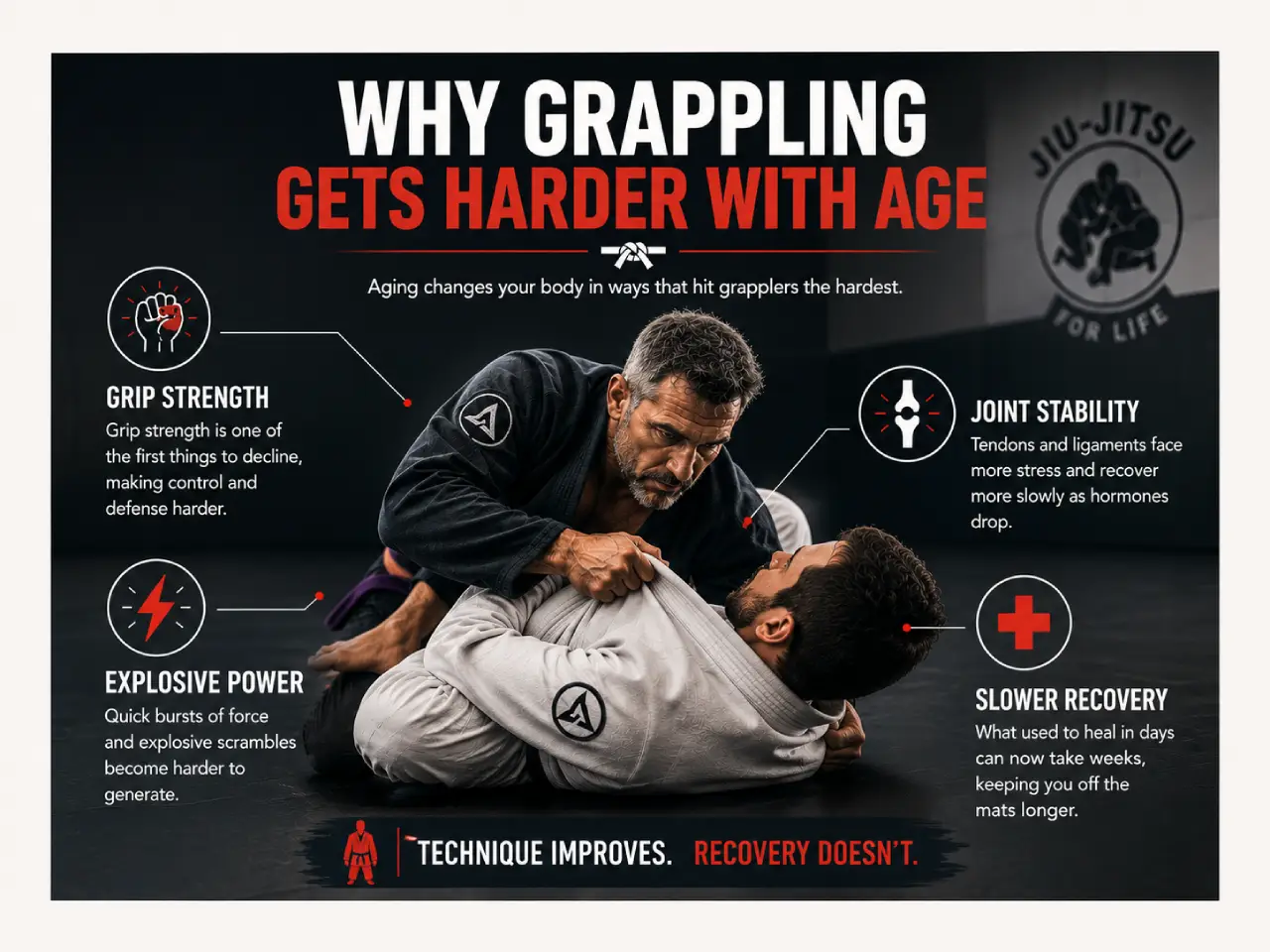
Most sports lose a step with age in fairly predictable ways. Jiu-jitsu is different because it demands grip strength, explosive scrambles, and joint stability all at once, often for six-minute rounds with very little rest. Those are exactly the physical qualities that decline first as testosterone drops.
Grip strength fades early. So does the ability to generate force quickly, the kind you need to escape a bad position or finish a takedown before your opponent adjusts. Connective tissue, the tendons and ligaments holding your shoulders, knees, and fingers together through years of grips and scrambles, recovers more slowly when hormone levels are low. None of this means your technique gets worse. It means your body increasingly can’t keep up with what your technique is asking of it, which is a frustrating and very specific kind of decline for a grappler.
This is also why so many men in their 40s and 50s assume the answer is just training harder or resting more. Sometimes it is. Often, the missing piece is physiological, not a training error.
What optimized hormones do for an aging grappler
Strength and muscle mass. Randomized trials in older men consistently show testosterone therapy increases muscle mass, strength, and power. In aging men with low bioavailable testosterone, treatment improved maximal force, rate of force development, and dynamic strength compared to placebo. On the mat, that translates to grip endurance and the ability to impose your frame on a roll.
Recovery and injury resilience. More lean tissue and better protein synthesis support faster recovery between hard rounds and more resilient connective tissue, which matters when you’re training around a full-time job and a family.
Body composition. Testosterone therapy in men who need it reliably reduces fat mass and increases lean mass, with reductions in weight and waist circumference that tend to hold over the long term. For a grappler managing competition weight, a leaner baseline makes the cut a lot more humane.
Focus and mental clarity. Healthy testosterone supports mood, motivation, and cognitive sharpness, the difference between dragging yourself to class and actually wanting to be there.
Overall health. Beyond performance, optimization is linked to improved lipid profiles and better metabolic markers. Those are the things that keep you training for decades instead of seasons.
What evaluation actually looks like for an athlete
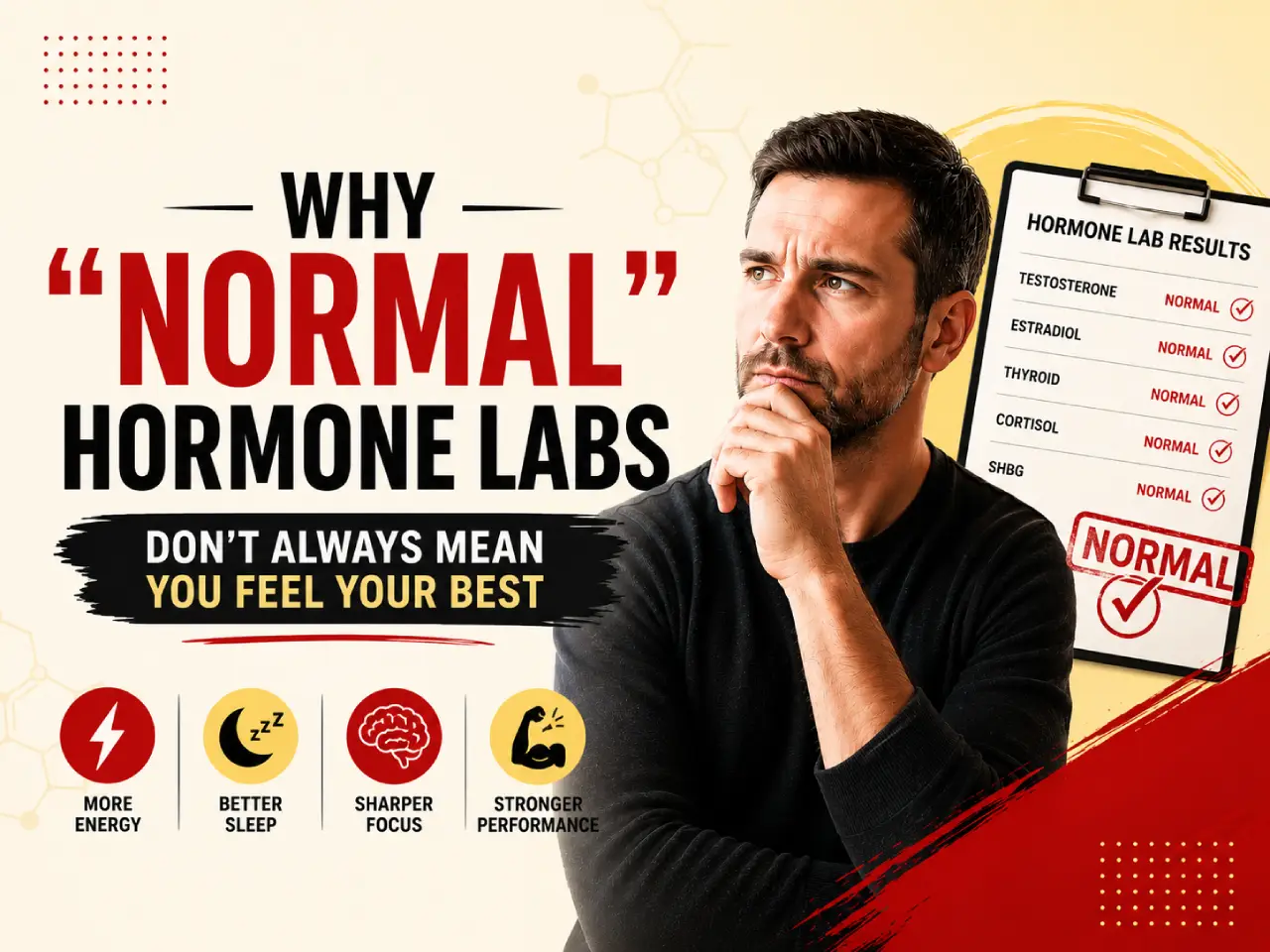
Labs for an active grappler need a little more context than labs for someone who isn’t training hard. Training load, hydration, and recent sessions can all shift values like hematocrit and cortisol, so we take your training schedule into account when we read your results, not just the numbers on the page.
A typical evaluation starts with a full hormone and metabolic panel, the same comprehensive workup we’d run for any patient, plus a conversation about your training volume, your competition schedule if you have one, your sleep, and any current injuries. If you’re heading into a tested competition, we’ll also talk through timing and what that means for your plan before anything gets started.
This isn’t a five-minute intake built around handing you a prescription. It’s a real evaluation built around what your body is actually doing, in and out of the gym.
The honest downsides we monitor
Any provider who tells you HRT carries no risk is selling, not treating. Here’s what we actually watch for.
Erythrocytosis, or thicker blood. Testosterone can raise hematocrit, which increases clotting risk if it goes unmanaged. This is the most commonly monitored side effect, and it’s worth watching even more closely in athletes, since intense training can independently affect blood values. Guidelines call for baseline labs and rechecks at 3, 6, and 12 months, then annually, with dose reduction or a pause if hematocrit climbs too high.
Fertility suppression. Exogenous testosterone suppresses the signals your brain sends to the testes and can reduce sperm production to zero. It should be treated as a contraceptive. Recovery after stopping is possible but unpredictable, so if having children is on the table, that needs to be part of the plan from day one.
Blood pressure and cardiovascular markers. Testosterone therapy can affect blood pressure in some men, which is part of why we track it at every follow-up rather than just at the start.
Competition eligibility. As above, if you compete in a tested division, exogenous testosterone has implications you need to understand before you start.
It requires real management. Estrogen balance, blood pressure, and other markers need ongoing attention. This isn’t a set-it-and-forget-it prescription.
Building the full plan, not just the prescription
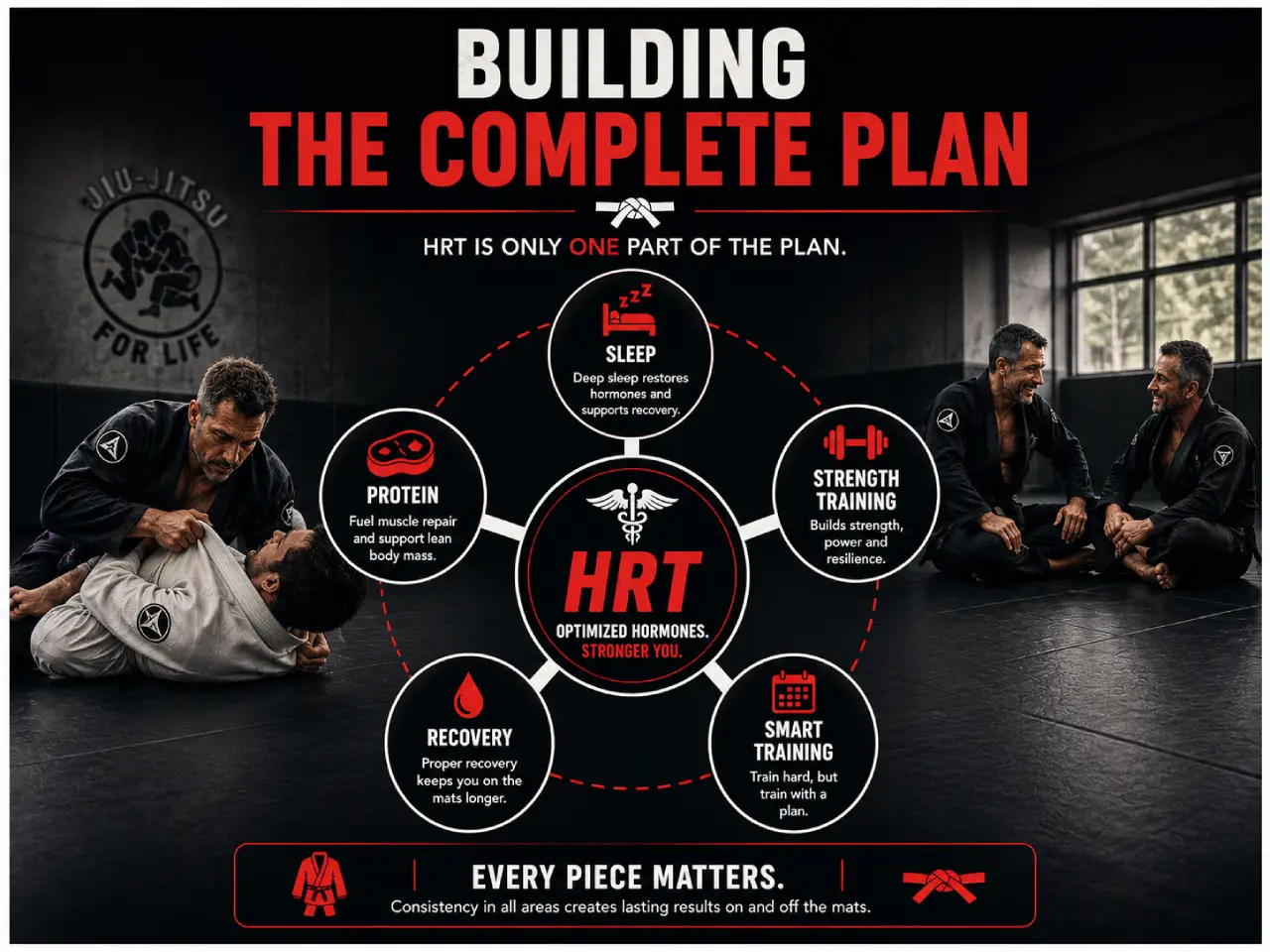
Hormones are one lever, not the whole plan. For grapplers specifically, a few things tend to matter as much as the prescription itself.
Sleep is where most of your actual recovery happens, and chronic short sleep undermines testosterone on its own, regardless of treatment. Protein intake supports the muscle repair that hard training demands, especially as recovery slows with age. Joint and connective tissue support, through training volume management and adequate recovery days, matters more for grapplers than almost any other athlete, given how much grip and joint stress the sport involves. None of this replaces medical treatment when it's needed, but none of it works as well without these basics either.
What we actually see
When a midlife grappler is properly evaluated and managed, the pattern holds up consistently. They recover faster, hold strength later into hard rounds, lean out, sleep better, and keep training instead of quietly dropping off the mat. We don’t hand out a prescription and walk away. We look at your training load, your sleep, your nutrition, and your goals, then use hormones as one piece of a complete plan. Getting your body to work the way it’s supposed to as you age is just good medicine.
San Antonio and Austin grapplers: train for the long game
Hoot HRT is a San Antonio-based telehealth clinic serving athletes throughout Texas, including the Austin jiu-jitsu community. If you want to keep training and competing with the body you had a decade ago, book a consultation through our website, and let’s build your plan.
Written and Medically Reviewed by: Joe Hamm, PA-C, Co-Founder, Hoot HRT
Published by: Hoot HRT
Frequently Asked Questions
Is HRT considered cheating in jiu-jitsu?
Physiologic hormone replacement restores testosterone to a healthy normal range rather than granting a superhuman edge, which is different from supraphysiologic anabolic dosing. Tested competition organizations like the IBJJF ban exogenous testosterone without an approved exemption, so competitors should understand the rules first.
What are the benefits of testosterone therapy for older grapplers?
Research shows testosterone replacement therapy in men who need it improves muscle strength and power, supports recovery, reduces fat mass, improves lipid profiles, and supports mood and focus.
What are the main risks of HRT?
The main monitored risks are erythrocytosis, thicker blood that raises clotting risk, suppression of fertility, and changes in blood pressure. All are managed through baseline and ongoing lab monitoring and individualized planning.
Will training affect my lab results?
It can. Training volume, hydration, and recent sessions can shift values like hematocrit, so we factor your training schedule into how we read your labs rather than evaluating the numbers in isolation.
Can I start HRT before a tournament?
It depends on the competition’s testing rules and the timing relative to your event. If you compete in a tested division, this needs to be discussed before you start any treatment.
Does Hoot HRT treat jiu-jitsu athletes in San Antonio and Austin?
Yes. Hoot HRT is a San Antonio-based telehealth clinic serving athletes throughout Texas, including the Austin area.
References
Sara A et al. “Testosterone therapy preserves muscle strength and power in aging men with type 2 diabetes: a randomized controlled trial.” 2017.
Saad F, et al. “Testosterone therapy in hypogonadal men results in sustained and clinically meaningful weight loss.” 2013.
Corona G, et al. “Efficacy and safety of testosterone replacement therapy in men with hypogonadism: A meta-analysis of placebo-controlled trials.”
“Prevalence and predictive factors of testosterone-induced erythrocytosis.” Frontiers in Endocrinology, 2024.
This article is for general informational purposes and does not replace an individualized medical evaluation. Hormone therapy carries risks and benefits that vary by patient history, and treatment decisions should be made with a qualified provider.