A lab report can say everything is fine while you still feel terrible. I see this every week, and I used to live it myself.
Hormone care isn't about chasing a number on a page. It's about energy. Sleep. Libido. Focus. Strength. The ability to get through your day without feeling like you're running on empty. There's a real difference between a lab result that's "normal" and a body that's actually working the way it should, and that difference is where most patients get lost.
"My labs were normal, but I still feel terrible"
I hear a version of this sentence almost daily.
It's not because primary care doctors are doing a bad job. Most are working inside a system that gives them six minutes per patient and a checklist built around insurance approval, not how you actually feel. They're treating volume, not you specifically.
That system asks one question: Are you sick enough to qualify for treatment? It rarely asks whether you're functioning at your best.
Take testosterone. The American Urological Association lists a total testosterone level under 300 ng/dL as a reasonable threshold to support a low testosterone diagnosis. The Endocrine Society goes further, saying the diagnosis should only be made when low levels show up alongside real symptoms. Both of those guidelines are useful for diagnosis. Neither one tells you whether a man sitting at 310 or 350, with no energy and no drive, deserves a closer look. We think he does.
We look past the single number
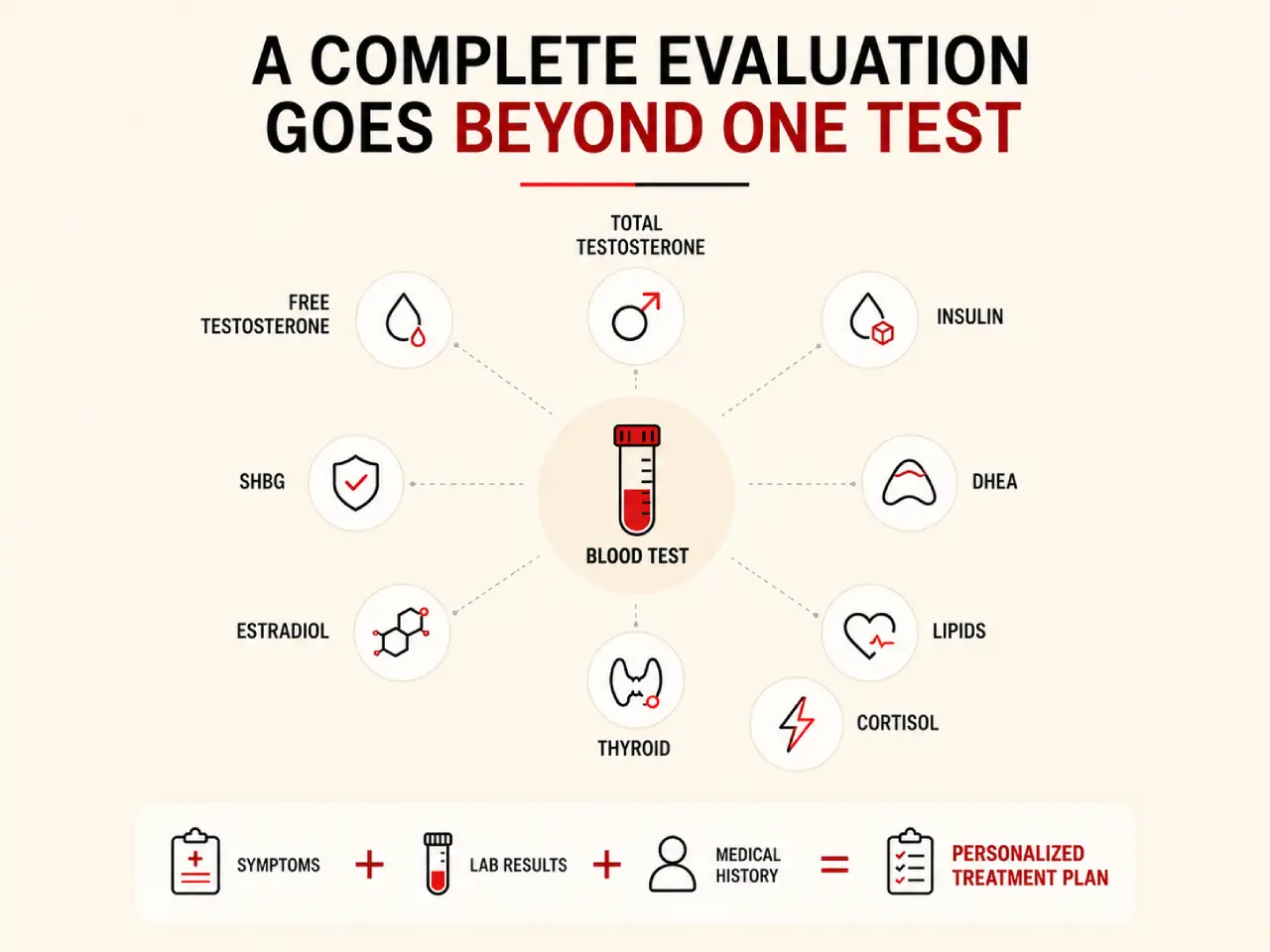
A full hormone evaluation isn't one test. We check total and free testosterone, SHBG, estradiol, thyroid markers, cortisol, DHEA, insulin, and lipids, depending on what your symptoms point to.
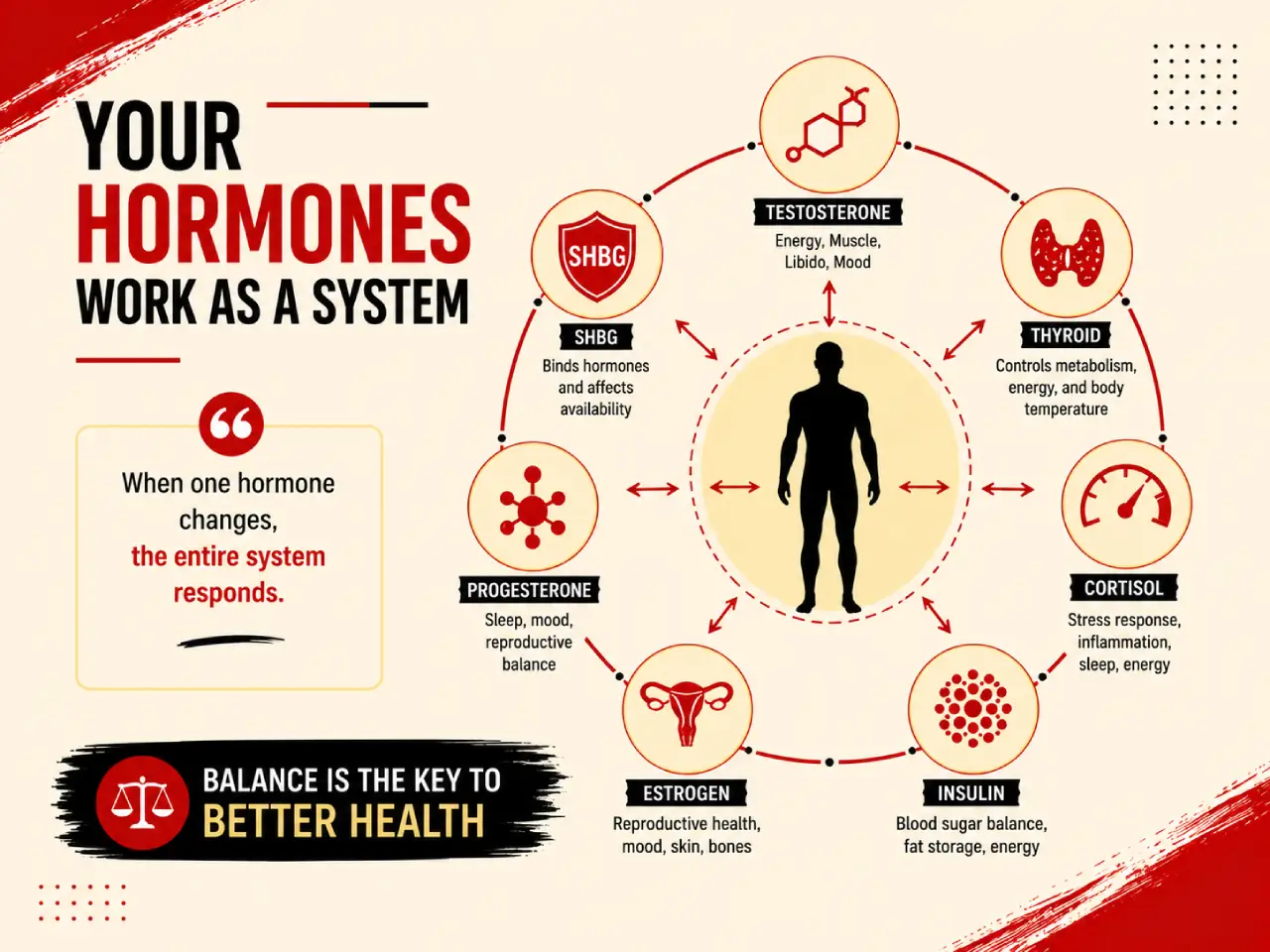
Sometimes the issue isn't low testosterone at all. It might be estradiol running too high, SHBG tying up the testosterone you do have, poor sleep, insulin resistance, or a thyroid that's quietly underperforming. Several of these can show up at once. Sometimes the fix is lifestyle and targeted support, not a prescription.
That's the line between a hormone mill and a clinic that's actually practicing medicine. A mill looks for reasons to start everyone on the same protocol. We look for the reason you feel the way you feel, and we use the smallest, safest intervention that gets you back to functioning well.
This is more than a libido conversation
Libido and intimacy matter, and we take both seriously. But hormone health touches far more than sex.
It shapes your energy, sleep, fat storage, mood, motivation, memory, bone density, and cardiovascular risk. Optimizing your hormones isn't a guarantee against disease, but it is one piece of a much bigger metabolic picture.
I know this from the patient side, too. I have Hashimoto's thyroiditis and have been on thyroid replacement for years with real results. I'm also a testosterone therapy patient myself, and I've felt firsthand what proper treatment, done correctly and monitored closely, can do for your energy, your relationships, your work, and your mental clarity.
My background in emergency medicine shapes how I think about this work. In the ER, I see what poor metabolic health turns into over time: heart attacks, strokes, diabetic complications, and the downstream damage of years of decline. By the time it shows up in front of me, it's been building for a long time. That's why I believe in catching it early instead of waiting for it.
The American Heart Association points to the same core levers we focus on here: good nutrition, regular movement, avoiding tobacco, real sleep, healthy weight, and controlled cholesterol and blood pressure. Hormone optimization fits inside that same framework. It isn't separate from it.
How we practice
Hoot HRT is based in San Antonio and sees patients across Texas through telehealth. Whether you're in San Antonio, Austin, Houston, Dallas, Fort Worth, or a small town two hours from the nearest specialist, you can get a real evaluation without burning a day off work to sit in a waiting room.
Labs are typically drawn locally through Quest Diagnostics. We review your history, your symptoms, your goals, and your results together, then build a plan around the person in front of us, not a template.
We also keep our practice small on purpose. With two providers, Joe Hamm, PA-C, and I, we can give patients real access and real follow-up instead of running people through on a schedule built for volume. We work with veterans, firefighters, nurses, jiu-jitsu athletes, executives, and parents who all need the same thing: to feel sharp and present in their own lives again.
Treatment is built around you, not a protocol
Safety isn't optional
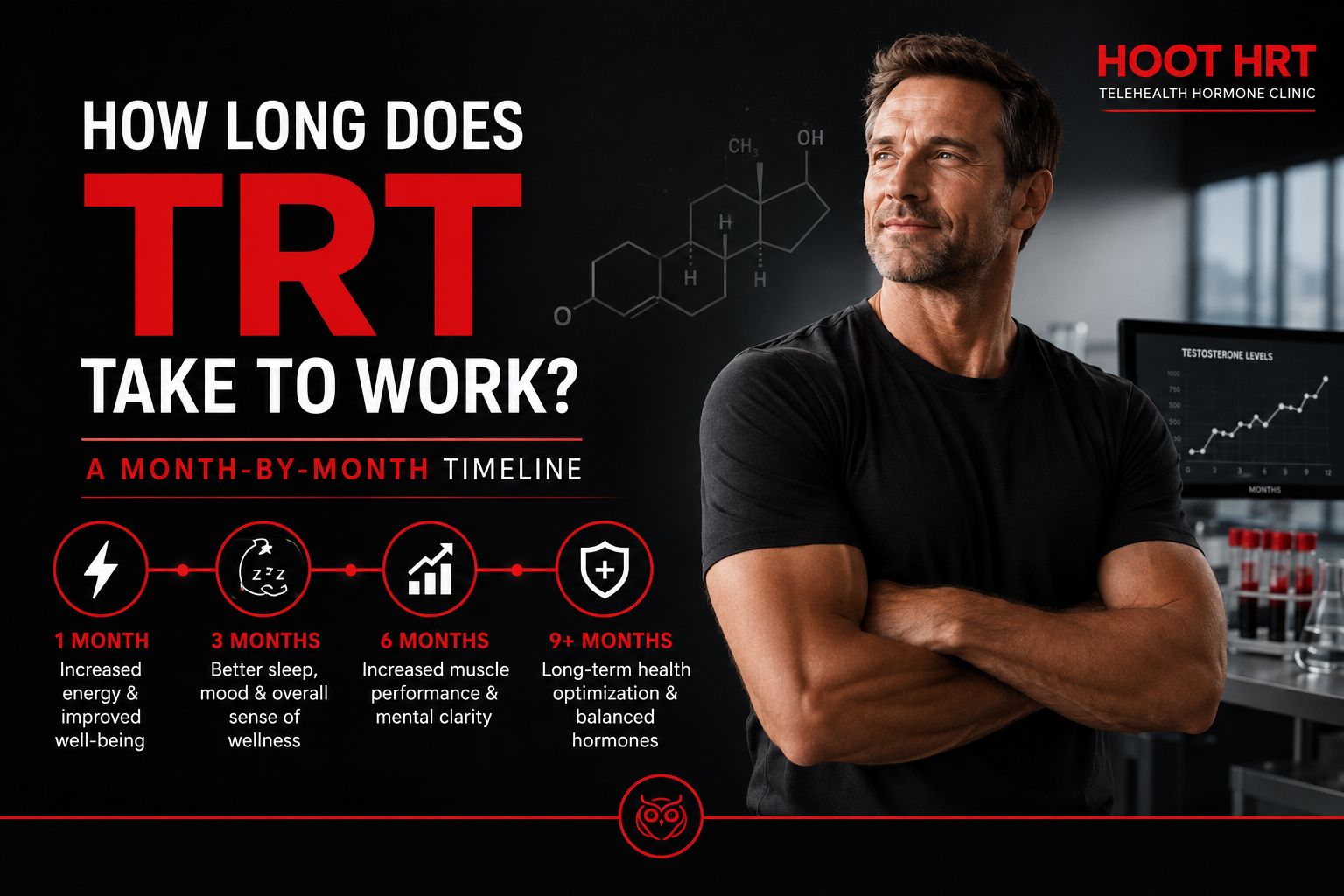
Hormones are powerful, and we treat them that way. Labs are typically rechecked around six weeks after starting therapy, again at six months, and again at one year, with more frequent checks when needed.
For men on testosterone, that usually means tracking CBC, hematocrit, estradiol, testosterone, PSA when appropriate, lipids, blood pressure, and how you're feeling day to day. Cardiovascular safety data have shaped labeling updates on testosterone products in recent years, and that's part of why ongoing monitoring matters, not a one-time prescription.
For women, monitoring depends on your specific plan, your age, your cycle status, and the route of treatment you're on.
You're not handed a prescription and left to figure out the rest. We stay in touch through visits, messages, and calls as your plan develops.
What it costs
You don't have to accept feeling worse every year
You spent the first half of your life in your best hormonal years without thinking about it. No rule says the second half has to be a slow slide into low energy, poor sleep, and a body that doesn't respond the way it used to.
You don't have to accept that as normal. You don't have to be told everything's fine when you know it isn't. You don't have to wait until something breaks to take this seriously.
That's the whole idea behind being a midlife enthusiast instead of just getting older and hoping for the best.
References
American Urological Association. "Evaluation and Management of Testosterone Deficiency." AUA Guideline.
Bhasin S, et al. "Testosterone Therapy in Men With Hypogonadism: An Endocrine Society Clinical Practice Guideline." Journal of Clinical Endocrinology & Metabolism, 2018.
The Menopause Society. "The 2022 Hormone Therapy Position Statement of The Menopause Society."
American Heart Association. "Life's Essential 8: Updated Cardiovascular Health Metrics."